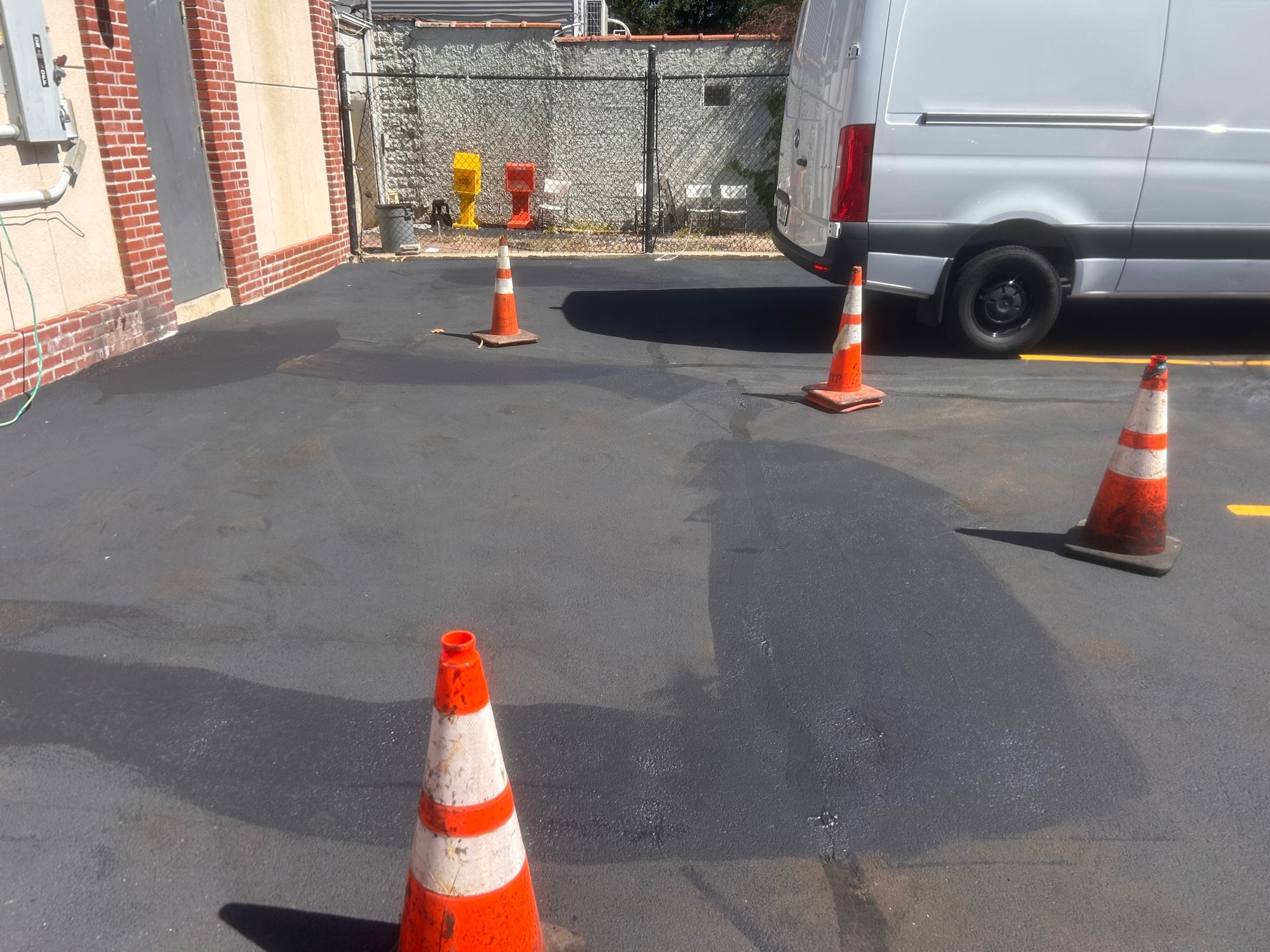
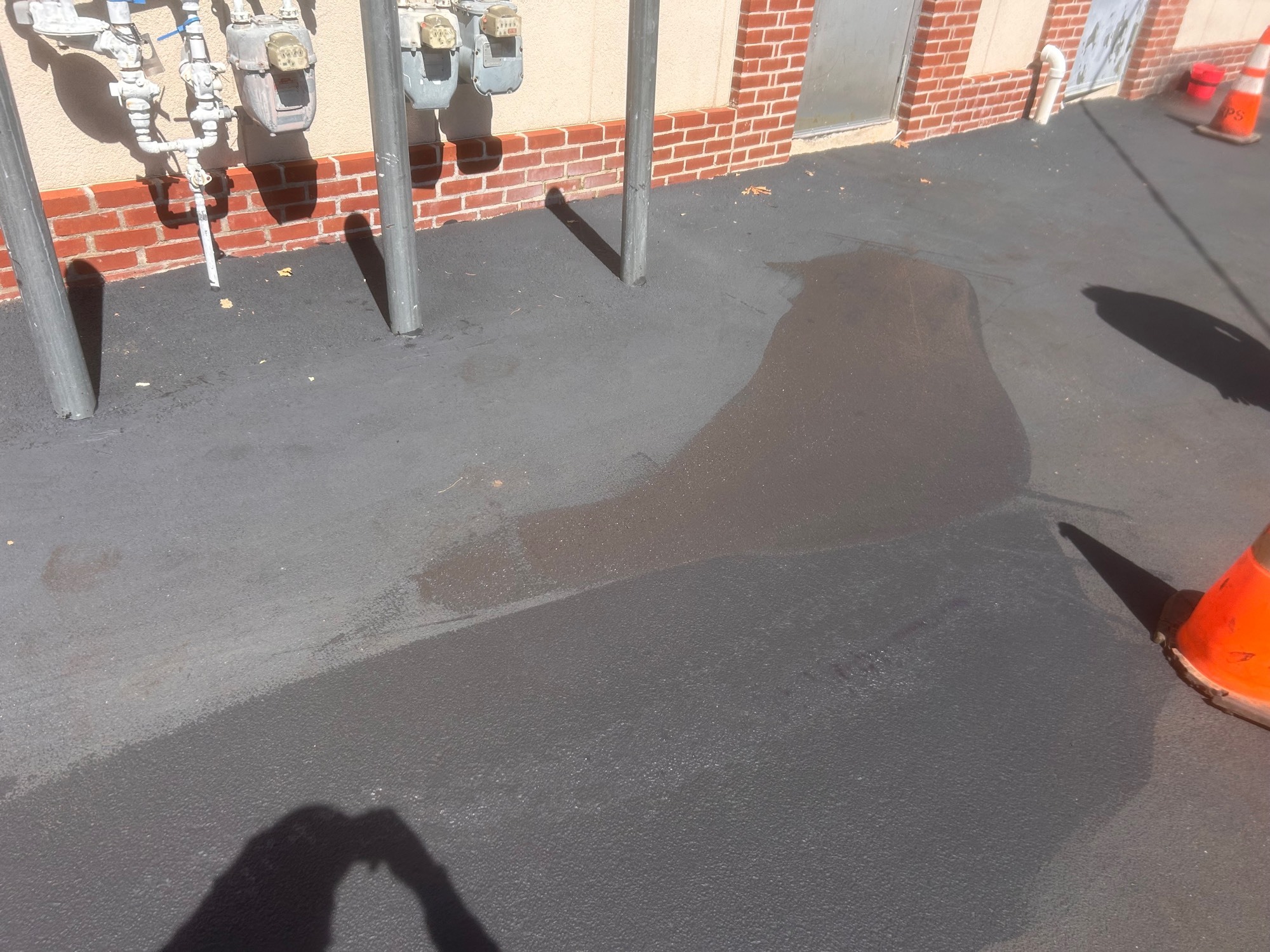
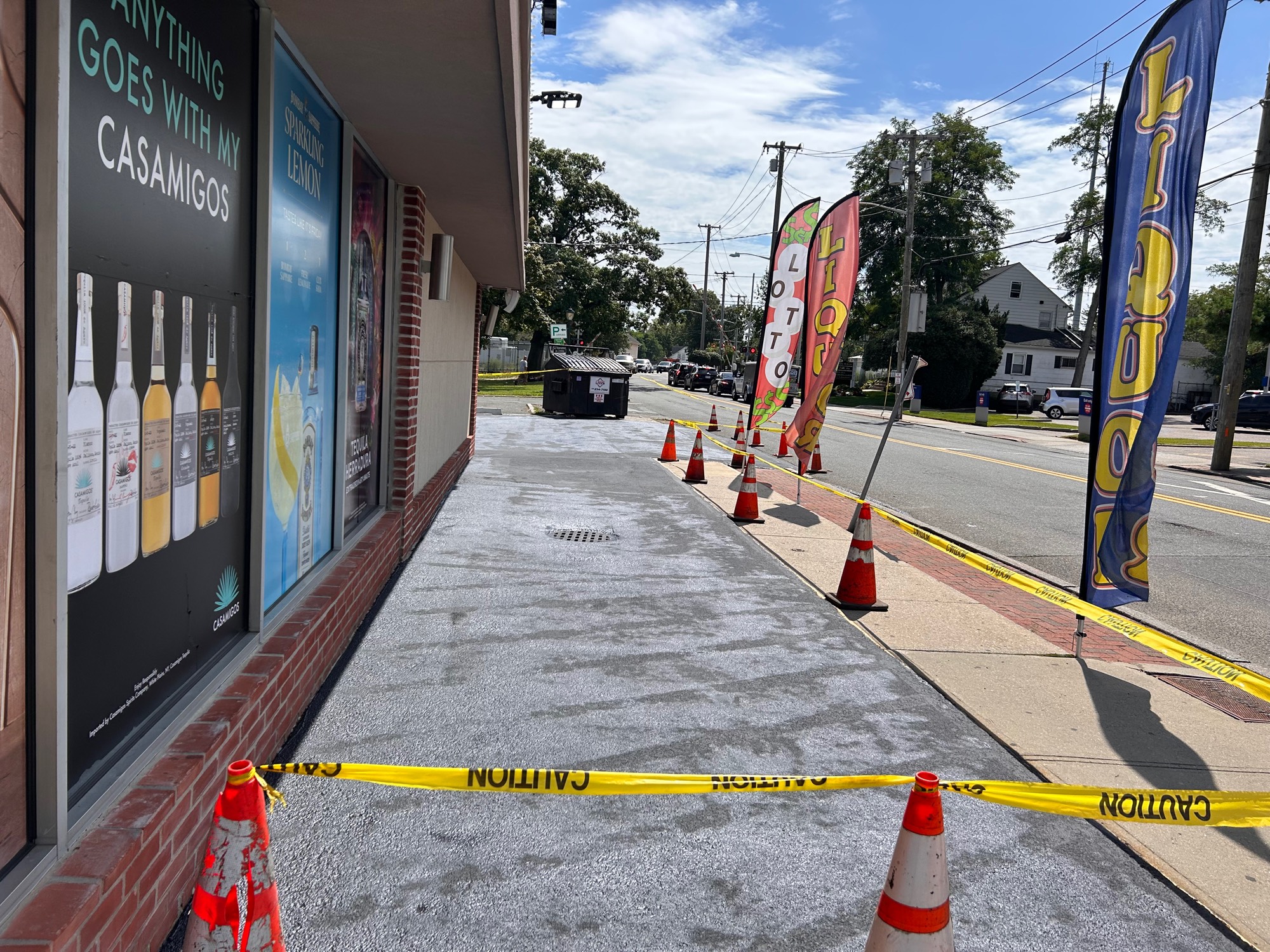
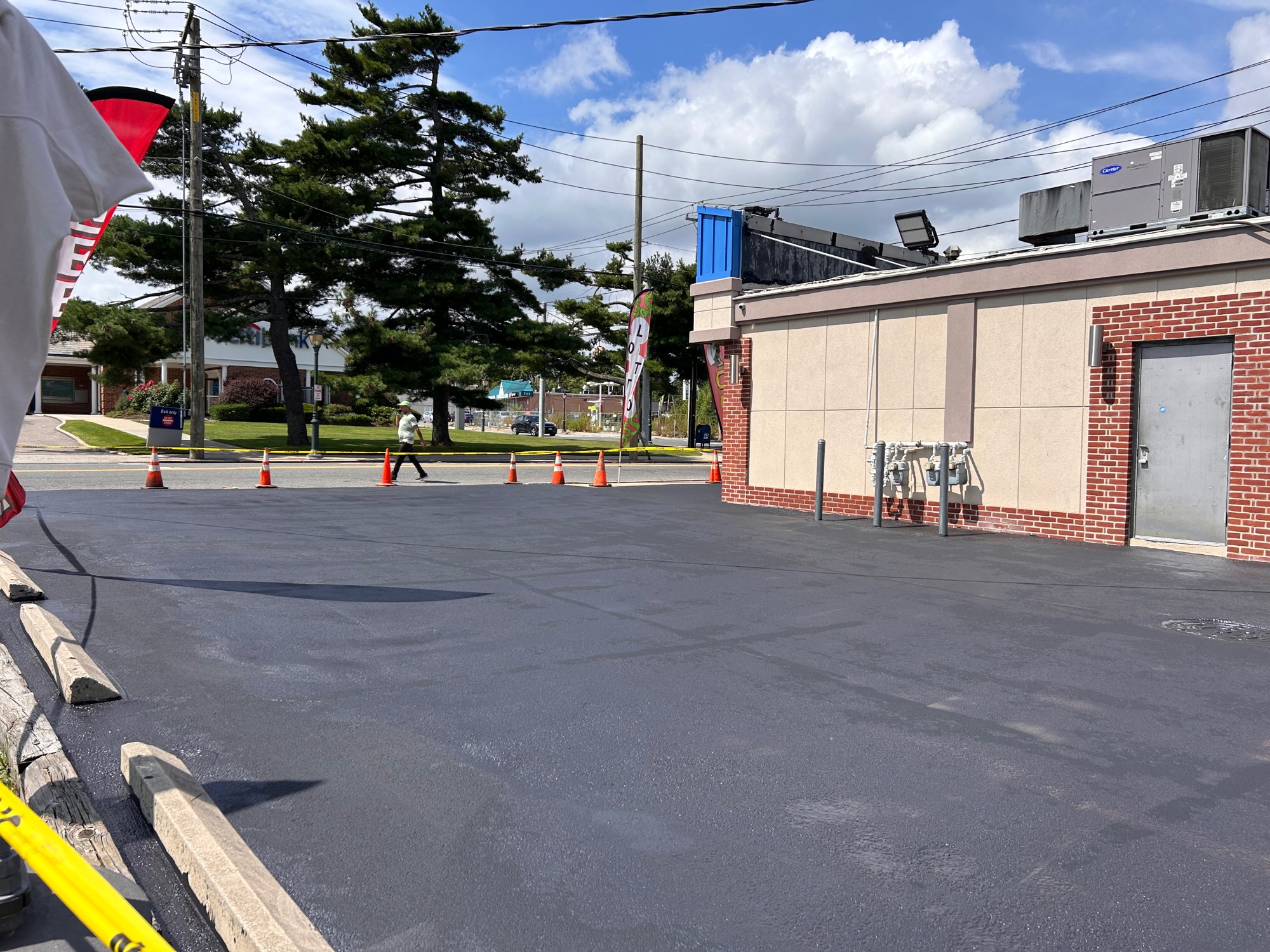
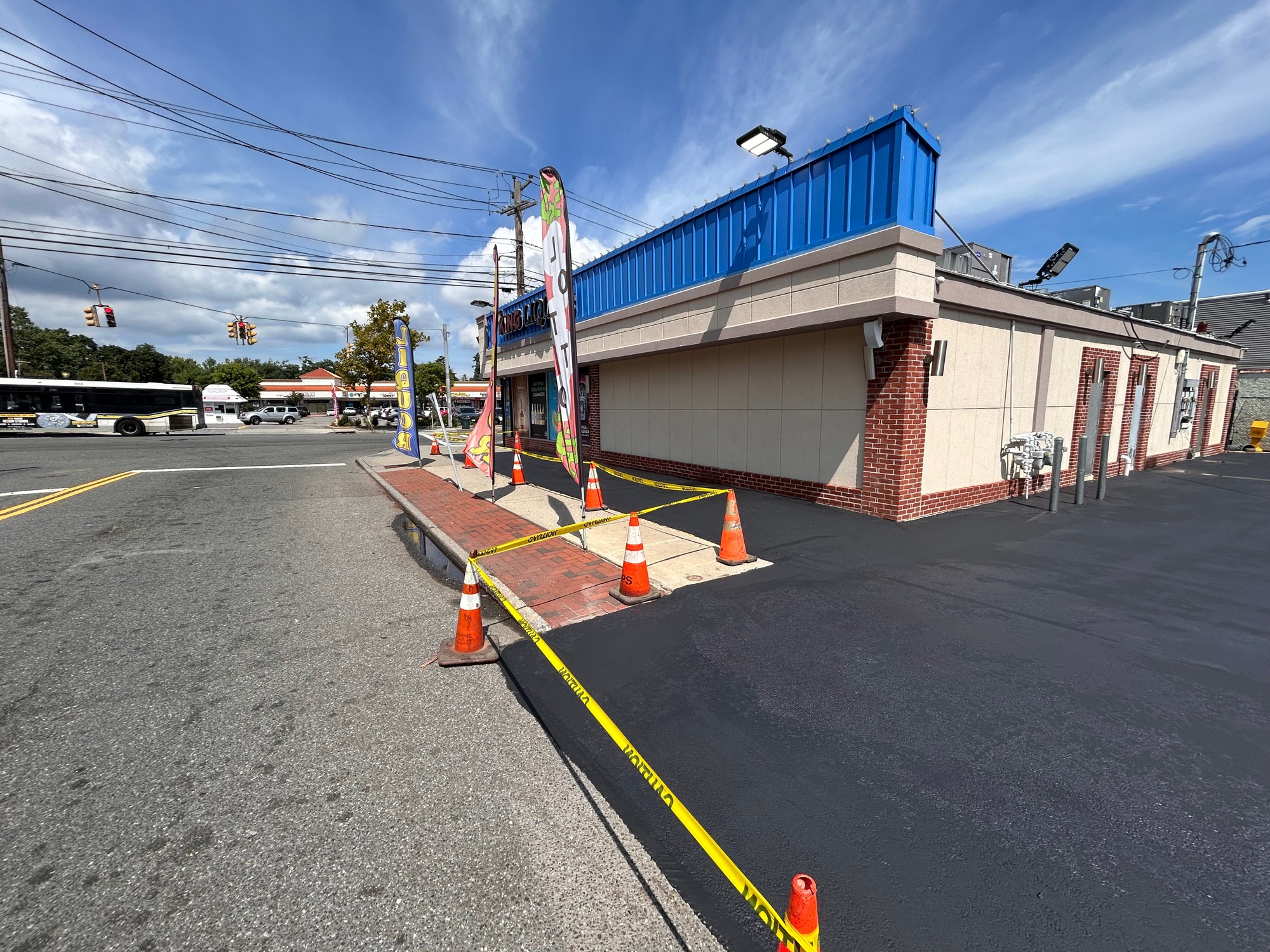
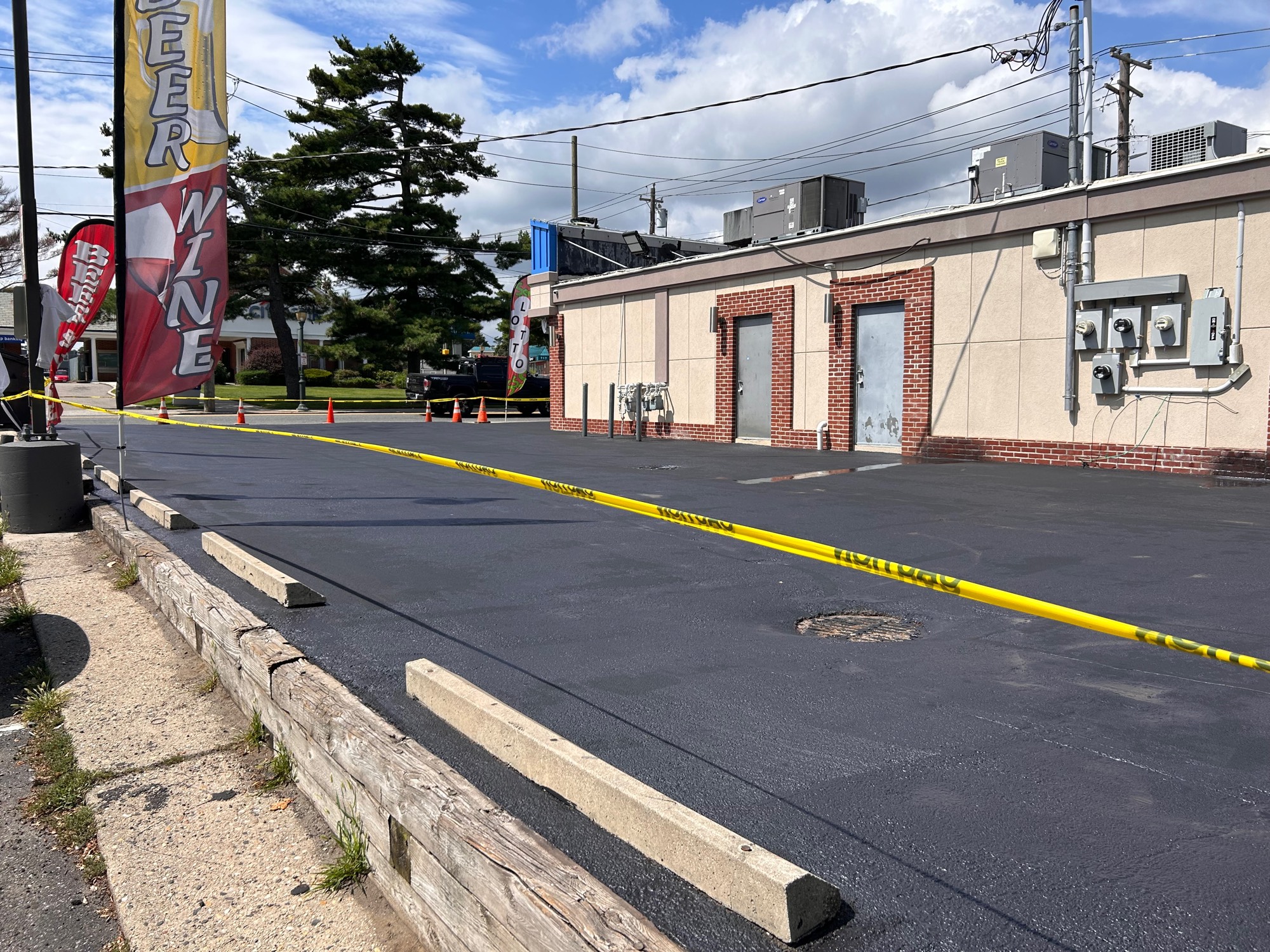
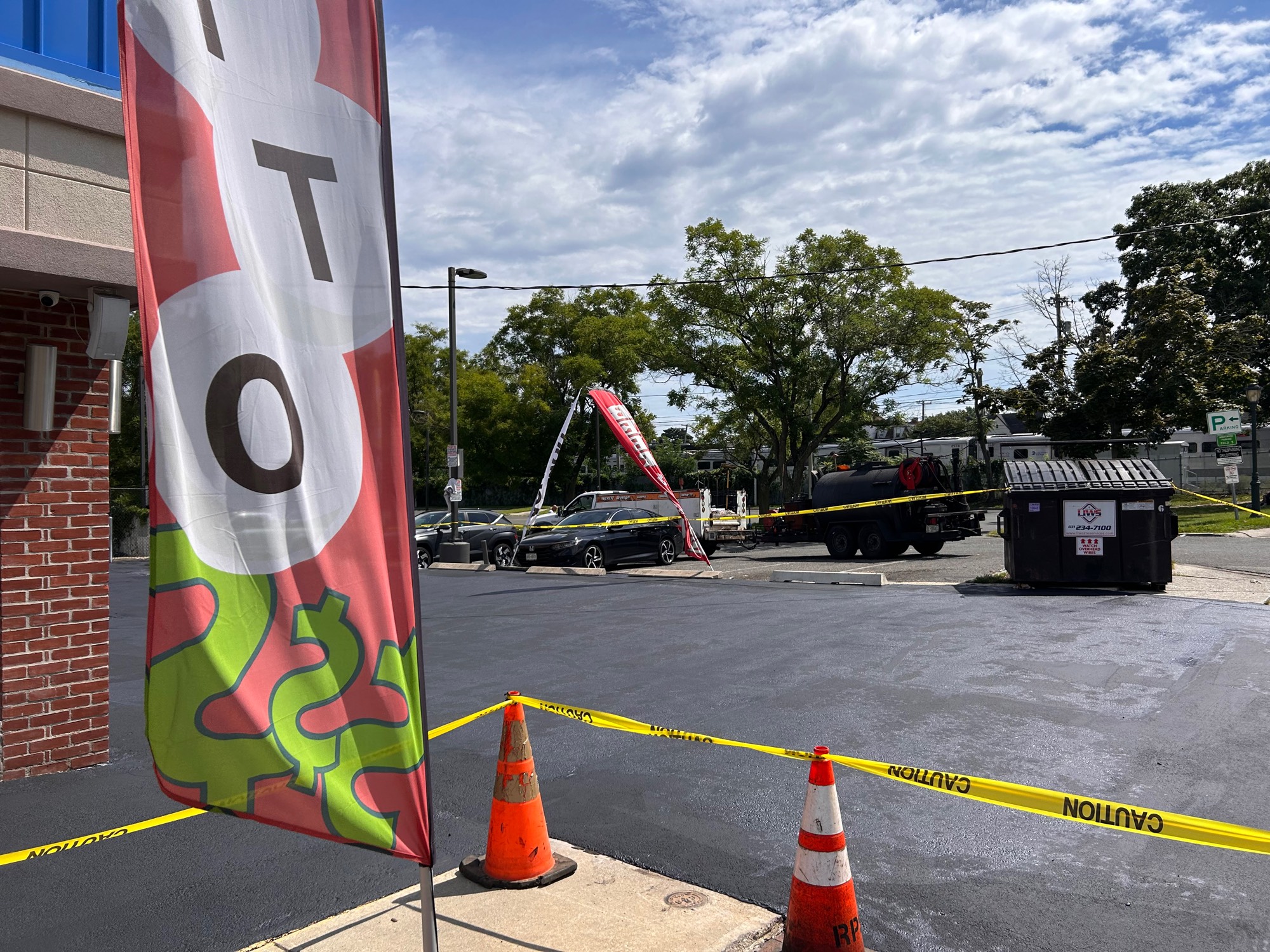
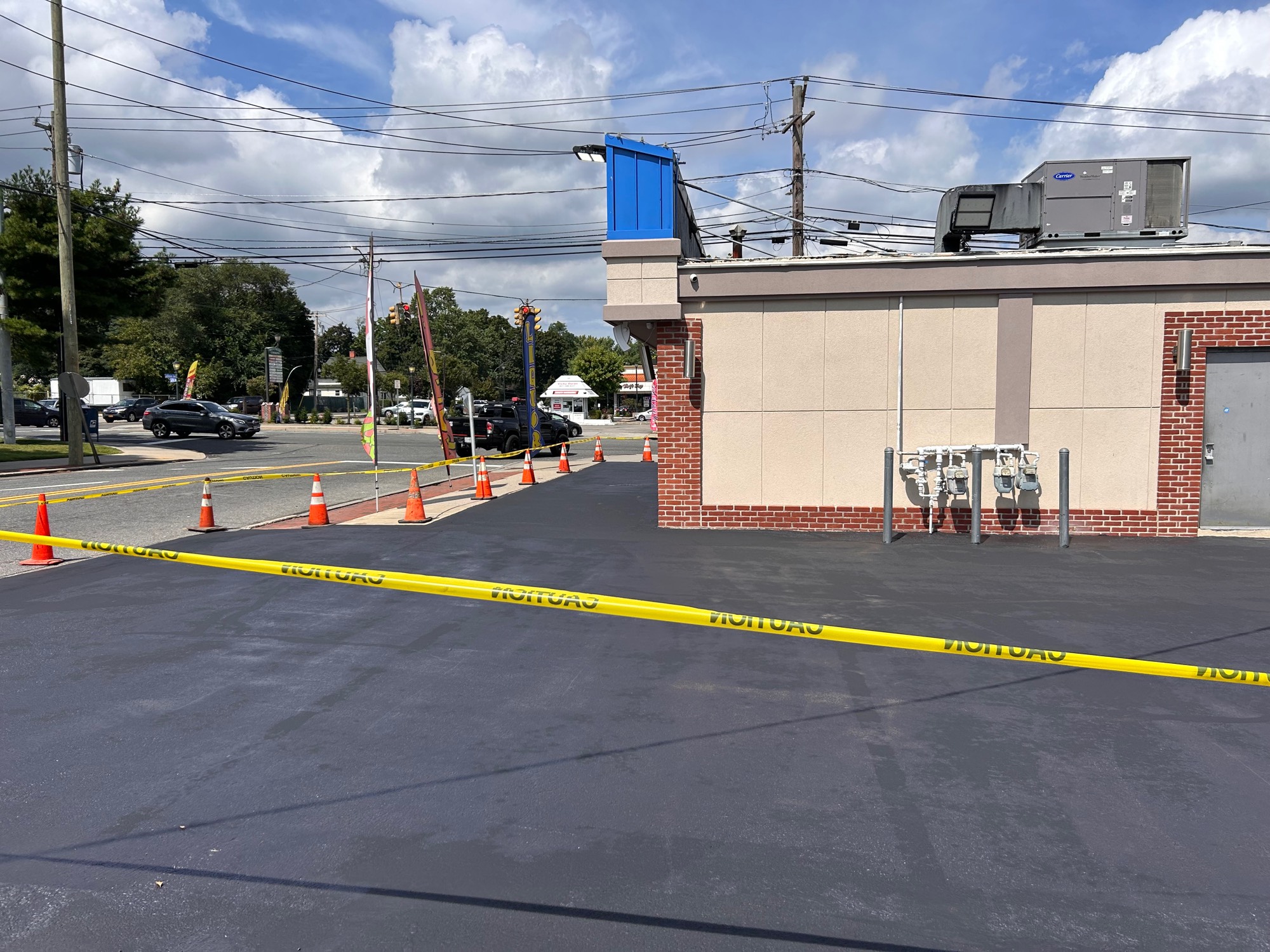
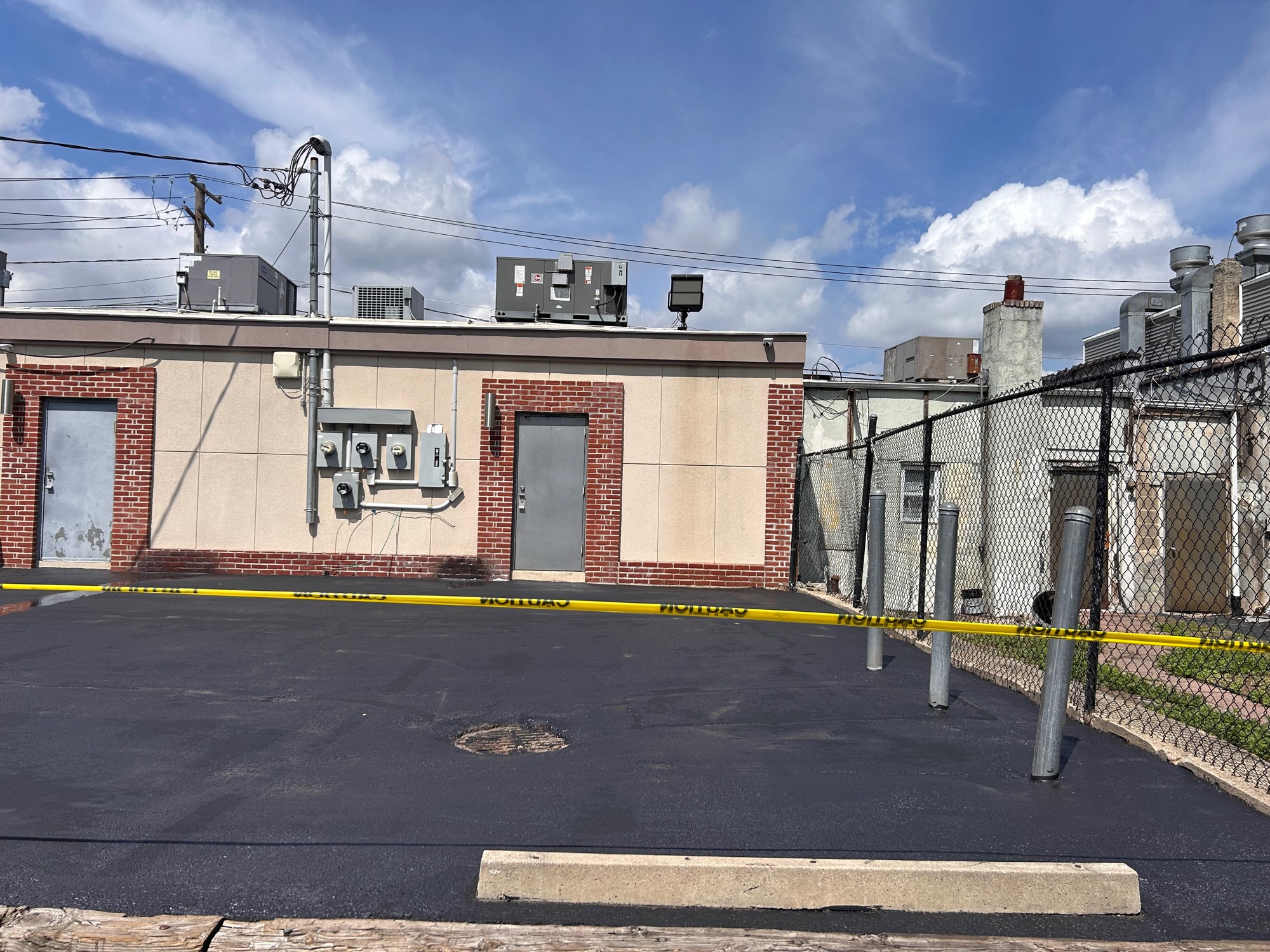
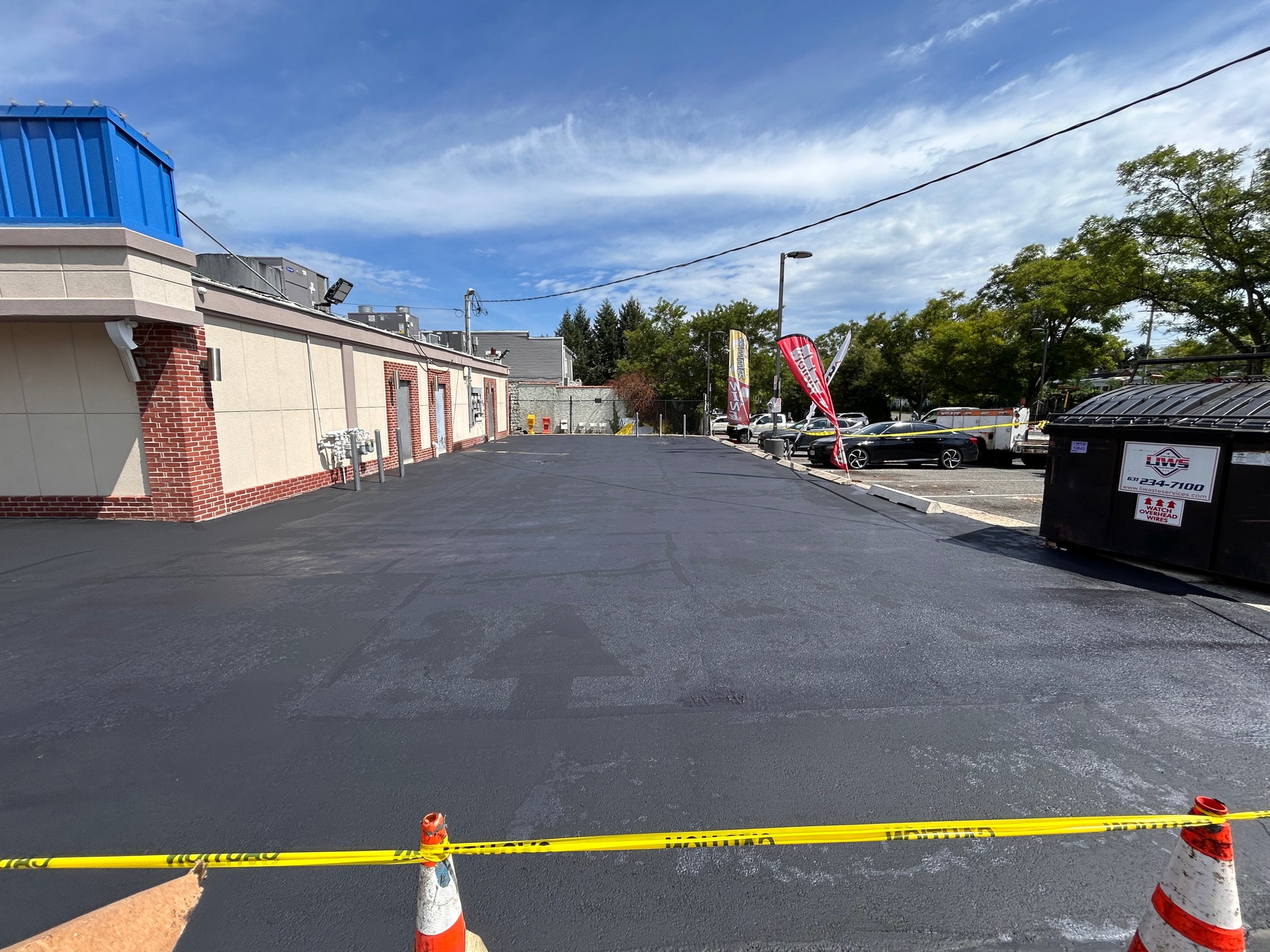
On a 3,065-square-foot retail parking lot on Suffolk Avenue in Brentwood, only 198 square feet of asphalt needed to be cut out and replaced. The repair was a single 33-by-6-foot strip at the entrance, roughly six percent of the measured lot.
Everything else was maintenance: crack sealing, sealcoating, car-stop work, and fresh striping. For Royal Pavement Solutions, the project shows how localized asphalt repair and preventive maintenance can work together on the same commercial lot.
Only 198 square feet needed replacement.
The rest of the lot called for maintenance, not removal.
Six Percent of the Lot Needed Structural Repair
Before work began, an aerial takeoff measured the site and logged 11 inspection pins. The entrance repair was sawcut around a 78-foot perimeter, creating clean, straight edges for the new asphalt to compact against.
This step is important, because the failed entrance section had to be removed and replaced before any of the protective maintenance work could begin. Services like sealcoating protect a surface, but it is not a structural repair.
Two tons of failed material were removed and hauled away. The crew placed three tons of Type 6 top-course asphalt and compacted the repair to a finished depth of two inches, flush with the surrounding grade.
Royal Pavement Solutions then applied tack coat to the milled out surface, but also to the short vertical walls of the sawcut edge along all 78 feet of perimeter. Why point this out? Tack coat is an asphalt emulsion that helps bond new mix to existing pavement. Think of it as asphalt super glue. Treating that vertical seam helps limit a common path for water at the patch edge, and while it might seem like a small detail, it’s important that your contractor uses best practices in order to achieve the highest quality and greater longevity for the repair.
The hot mix arrived in a propane-heated hot box with a belt conveyor. Keeping a small quantity of asphalt at working temperature supports proper placement and compaction while reducing the risk of segregation, when coarse and fine aggregate separate.
Those steps are easy to overlook on a repair under 200 square feet. Some asphalt crews might skip it for the sake of speed, but here, they were part of the same controlled process used to build a compacted, flush patch.
The Other 94 Percent Got Preventive Maintenance
After the failed section was repaired, the crew completed the broader scope across approximately 3,300 square feet:
- Sealed 100 linear feet of cracks with hot-applied liquid rubber.
- Hand-applied one heavy coat of sealcoat, with 60 gallons placed.
- Reset and re-anchored seven existing car stops, replaced one, and pinned all eight with steel rebar.
- Re-laid the existing striping pattern with DOT-approved traffic paint applied by airless spray.
A two- to three-person crew completed the work in just a single day. Efficiency.
For property managers, the takeaway should be practical and straight forward: Pavement failures don’t have a one-size-fits-all solution. Every project and every jobsite are different, and that means every small detail matter. Failed asphalt can be cut out and replaced, cracks can be sealed before they widen, and serviceable pavement can receive a protective sealcoat to extend its service life.
If your commercial lot in Brentwood or elsewhere on Long Island has isolated pavement failure alongside cracks and surface wear, consider combining asphalt repair with pavement maintenance instead of treating the entire surface the same way.
Contact us to discuss the pavement conditions on your property and the appropriate scope for your lot with one of our knowledgeable and experienced staff.