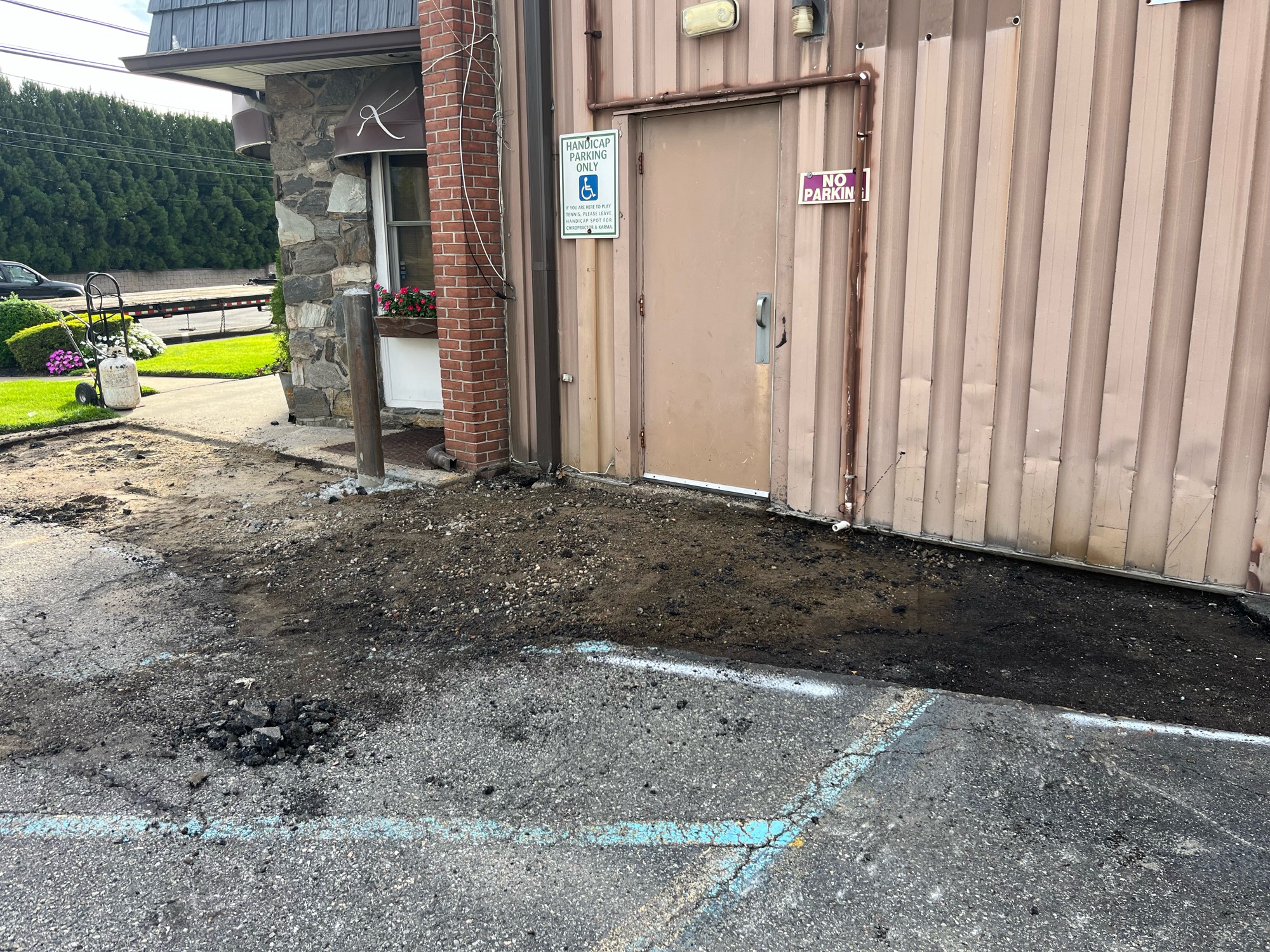
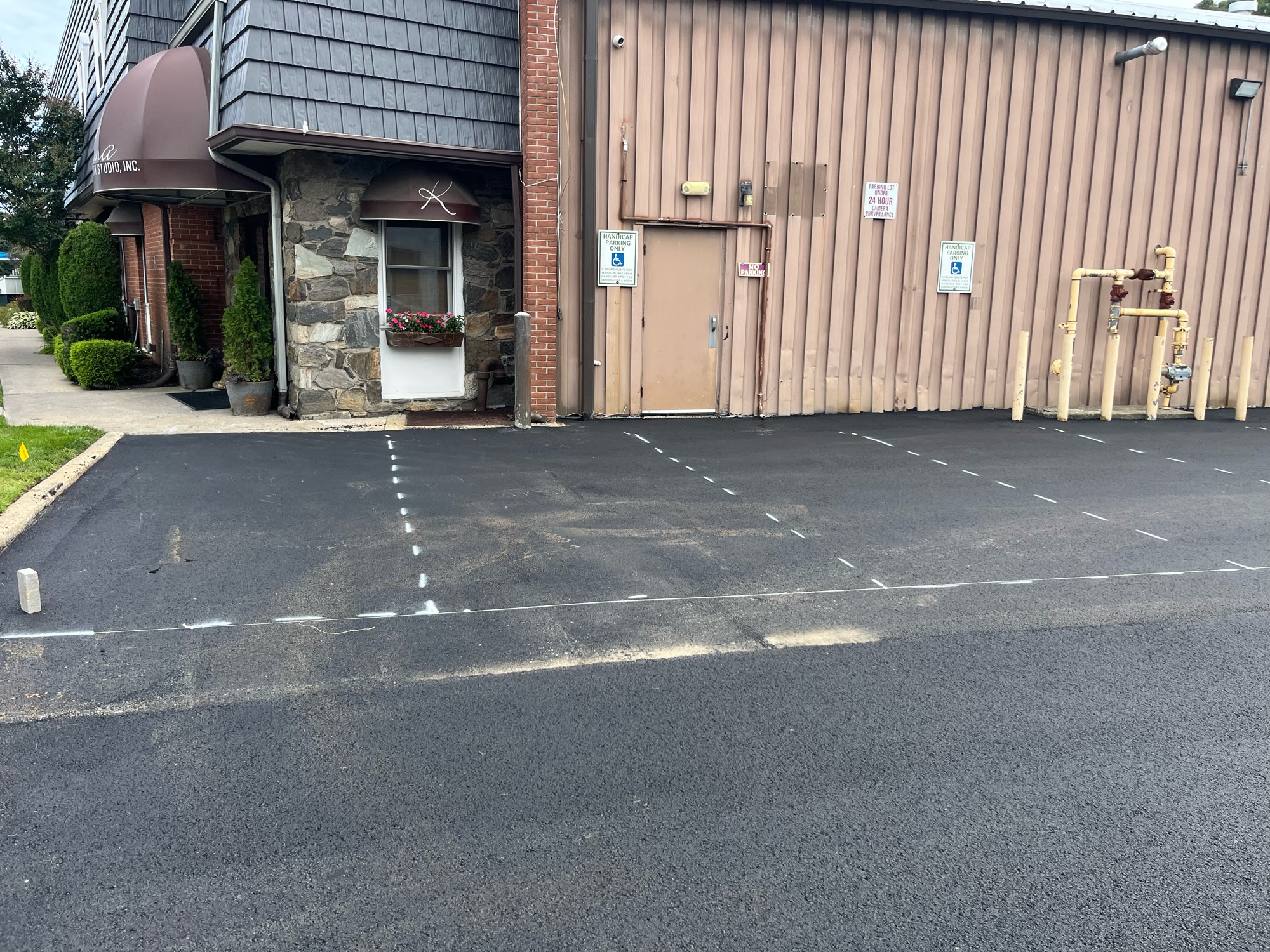
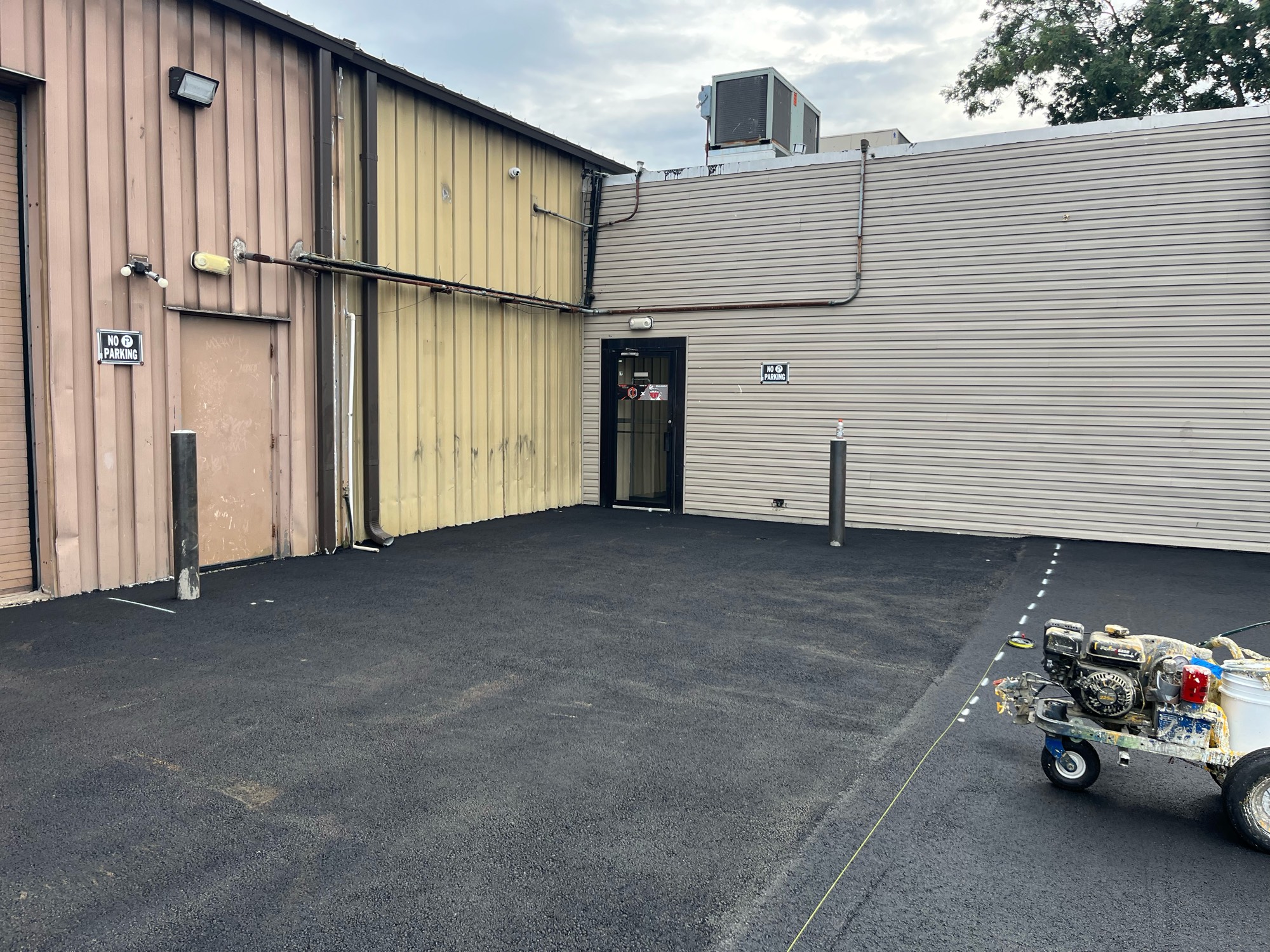
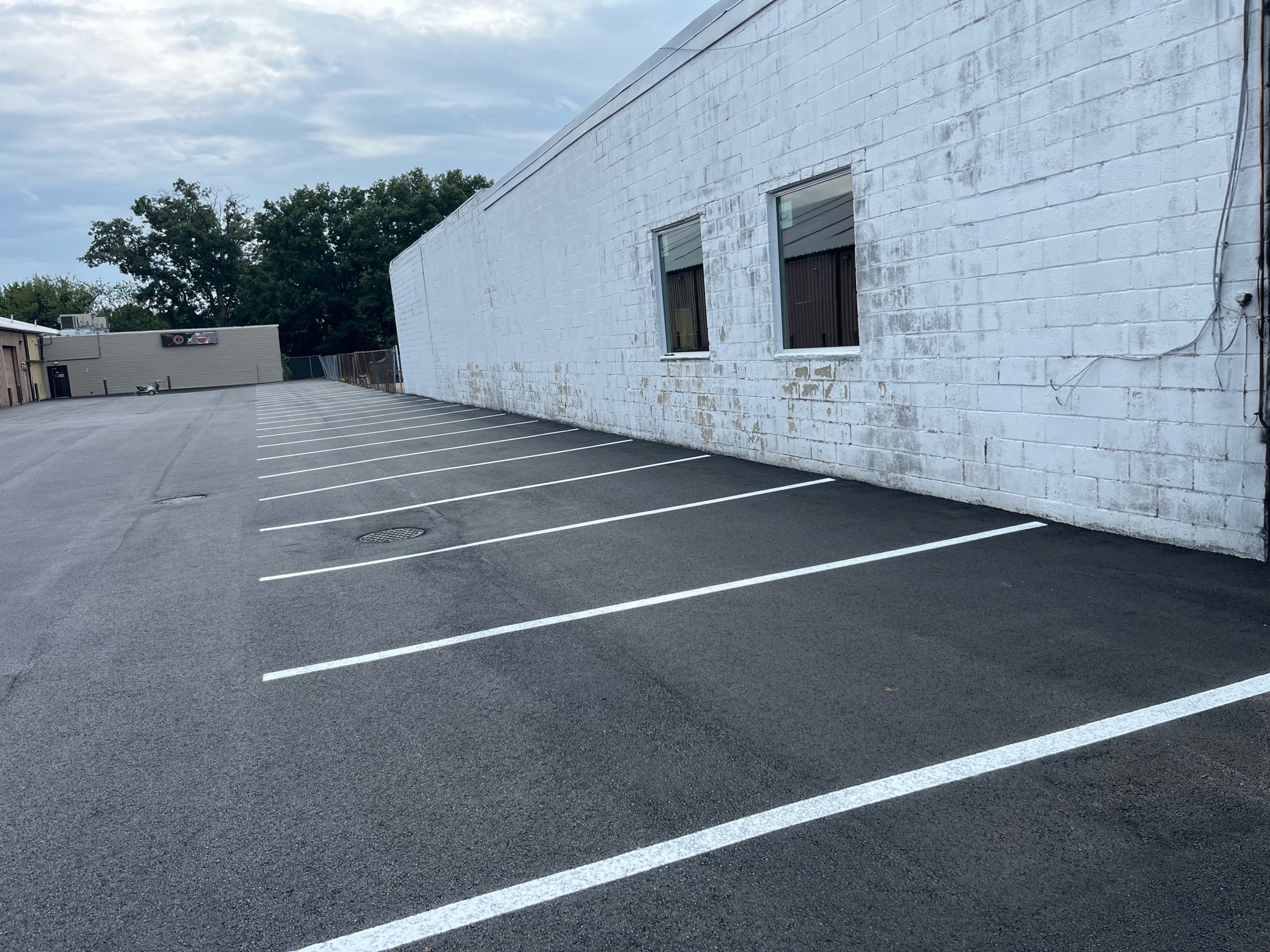
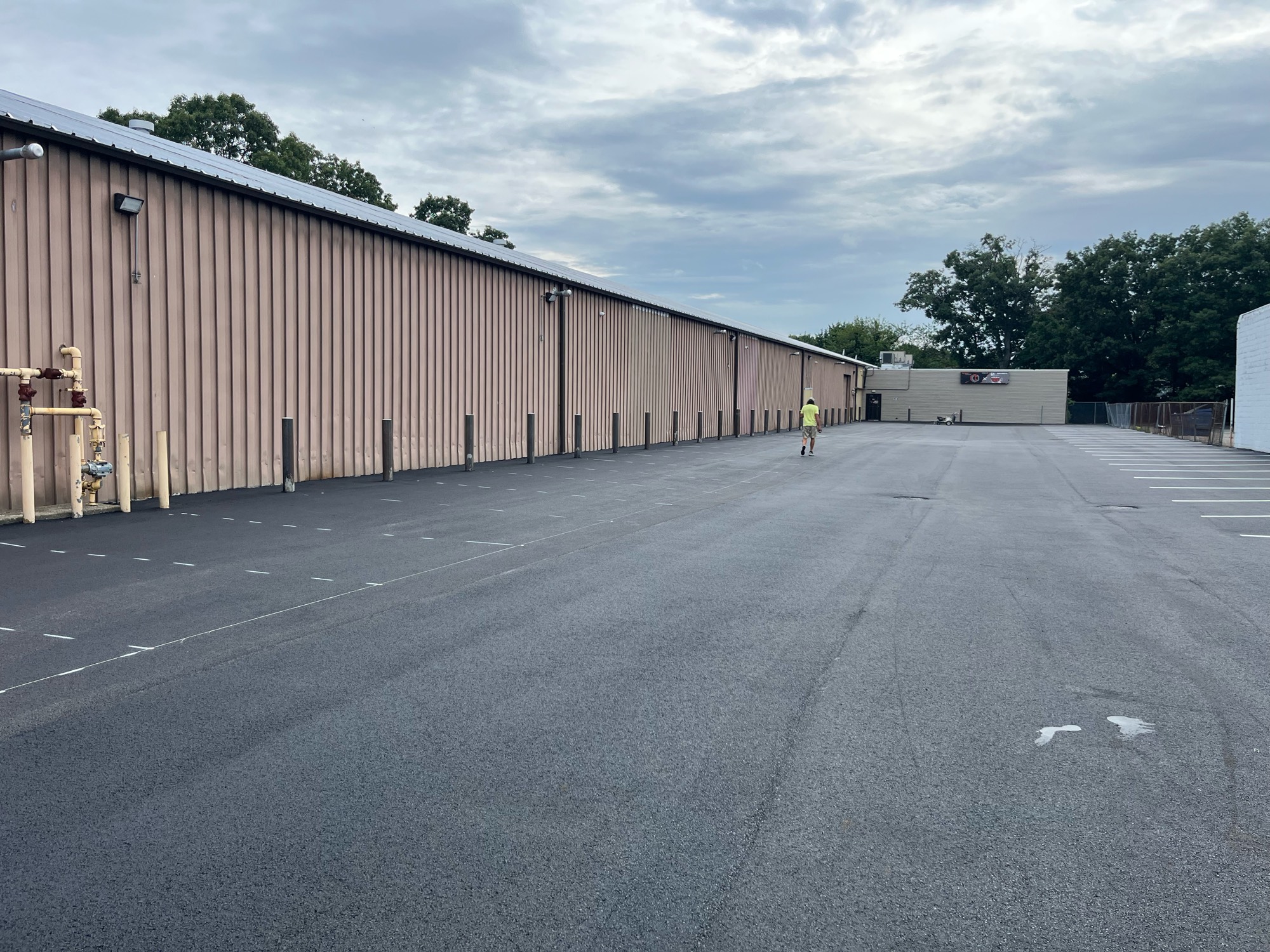
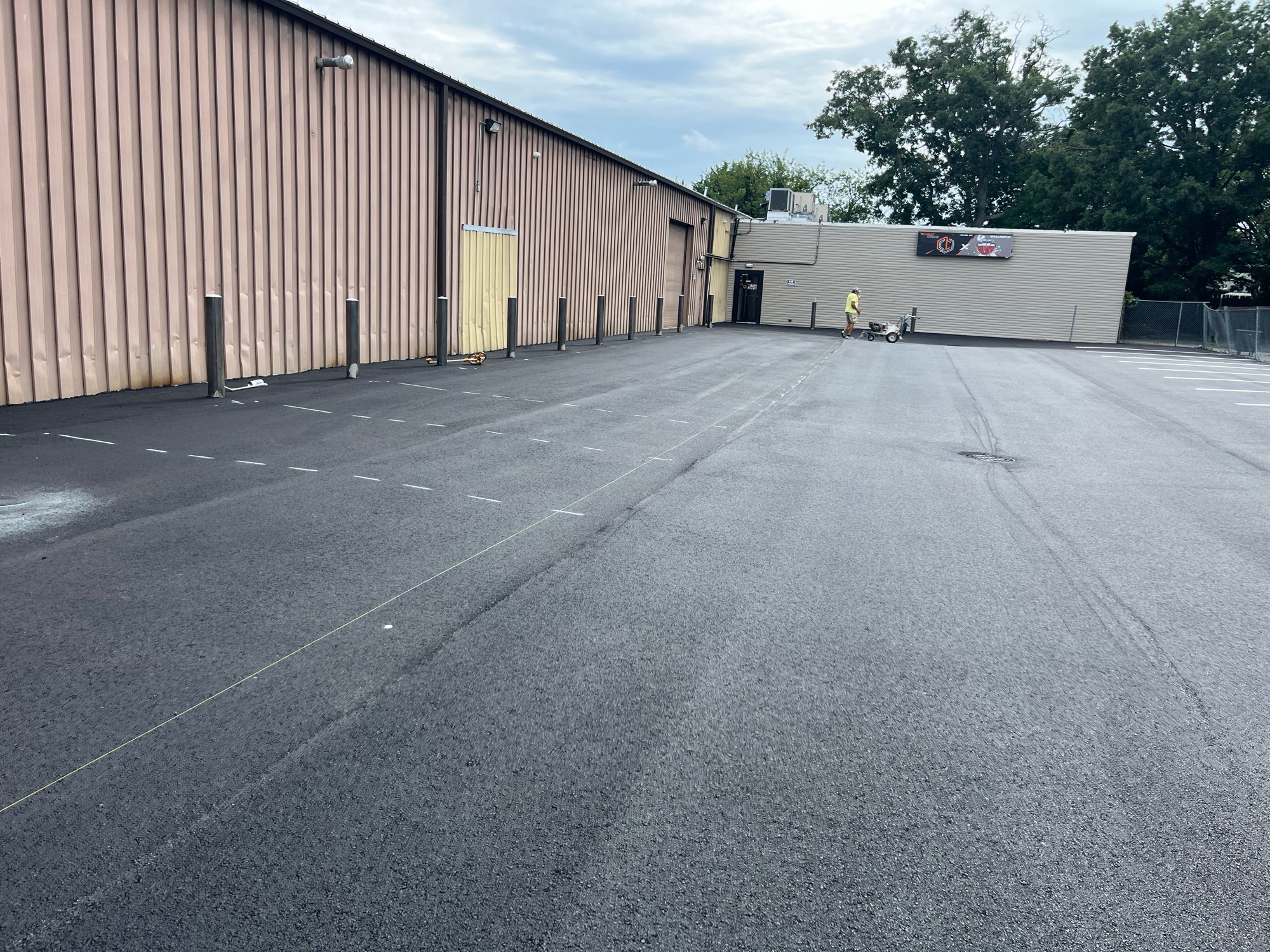
At a recreational tennis facility in North Merrick, the most important work on an 18,056-square-foot parking lot happened before the new asphalt surface went down.
Royal Pavement Solutions cleaned and sealed 2,000 linear feet of existing cracks with hot-applied liquid rubber, then resurfaced the lot with 174 tons of Type 6 hot mix asphalt. For a property manager comparing paving scopes, that sequence can look counterintuitive. Why spend time treating pavement that is about to disappear under a new surface?
Because even an overlay does not erase what is happening underneath it.
The new asphalt surface is directly influenced by whatever surface is below.
The Cracks Under an Overlay Still Matter
Existing cracks work their way upward through a new asphalt layer. That process is known as reflective cracking. If underlying cracks continue to open, close, or move, the new mat can eventually show cracking above them. Just when you might think you’ve erased the damaged history, it comes back with a vengeance, to ruin your shiny new asphalt.
That is why the crack-sealing step was so important on this North Merrick project. Before paving, we treated the 2,000 linear feet of cracks rather than simply covering the existing surface and moving on. The flexible, hot-applied material seals the crack before it is buried under the overlay.
For commercial property owners, this is an important detail when reviewing an asphalt paving proposal. Two scopes may both say “overlay,” yet the preparation beneath that overlay can be very different. Crack treatment is one of the items worth asking about before comparing the final numbers.
A truly good asphalt overlay depends on the work no one will never see.
Building the New Surface as a System
Crack sealing was one part of a larger resurfacing sequence. The project also included preparation at transitions, bonding between pavement layers, grade adjustments, and, finally, new striping.
Key pieces of the work included:
- 379 linear feet of transitional milling at tie-in points, lowering edges where new pavement met existing surfaces
- 101 gallons of tack coat applied at 0.05 gallon per square yard to bond the new asphalt to the existing pavement
- 174 tons of Type 6 top course placed to a finished compacted thickness of 1.5 inches
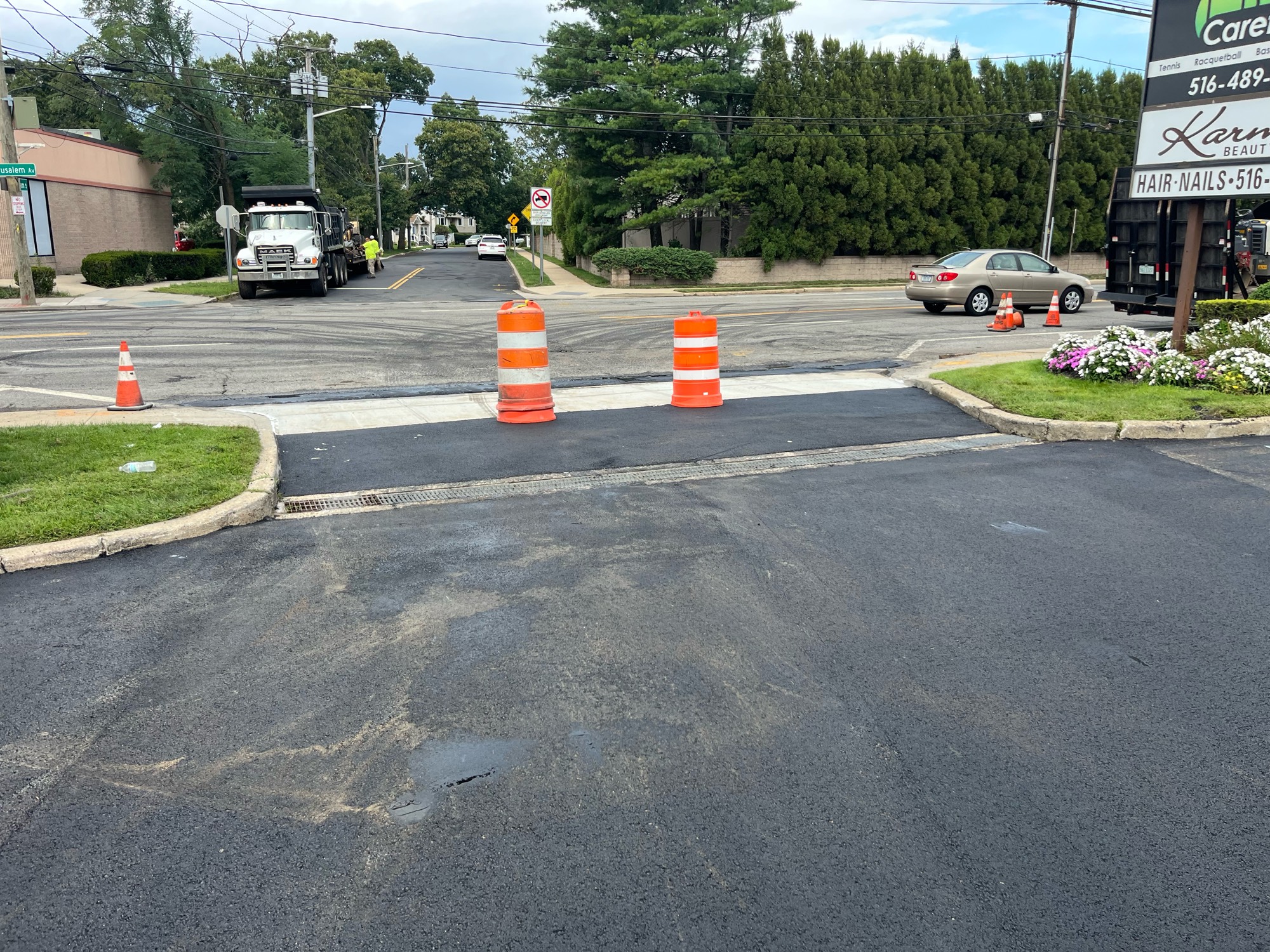
- Three catch basins raised 1.5 inches to meet the new grade
- A full re-layout to match the existing markings using DOT-approved traffic paint
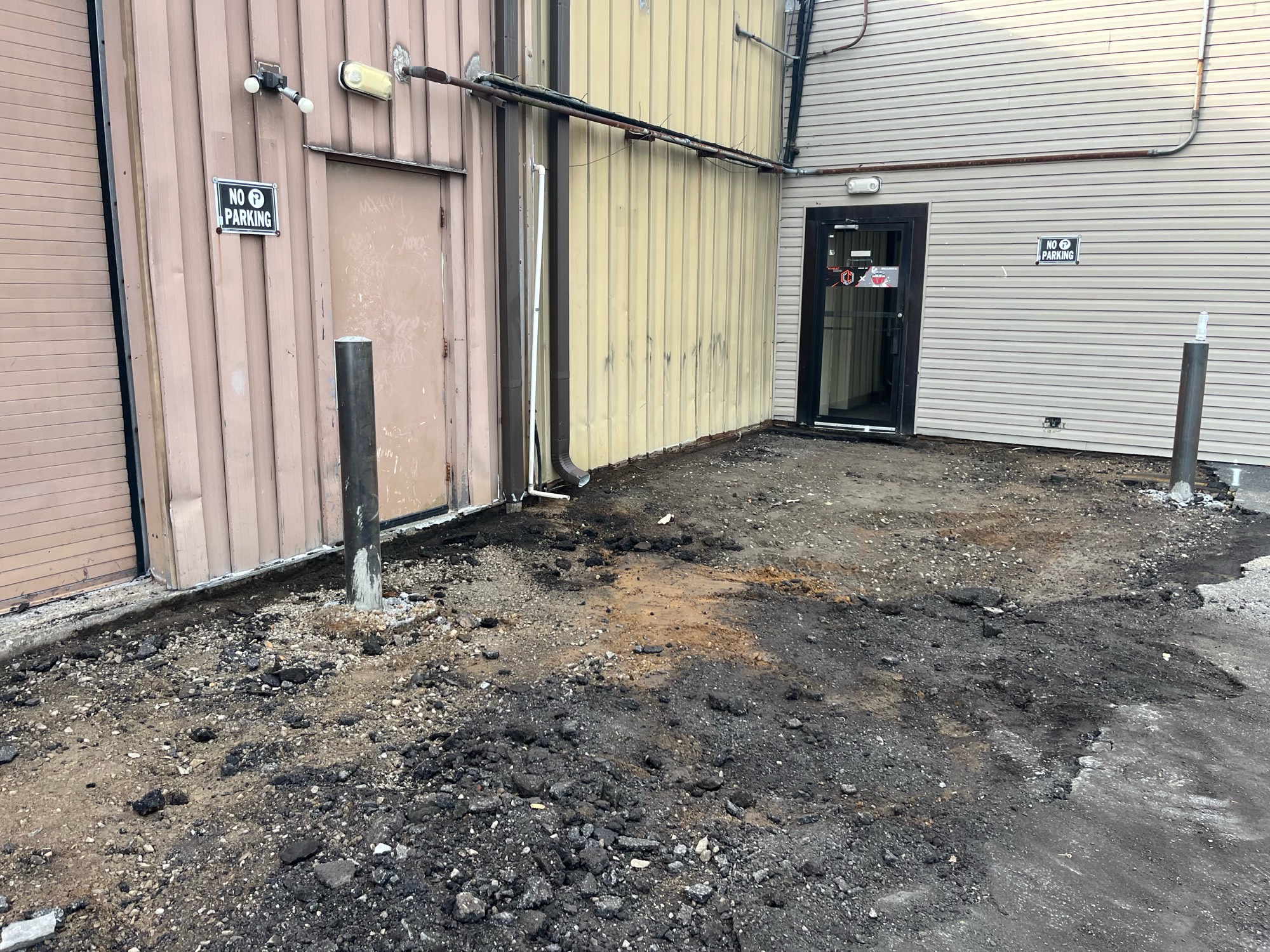
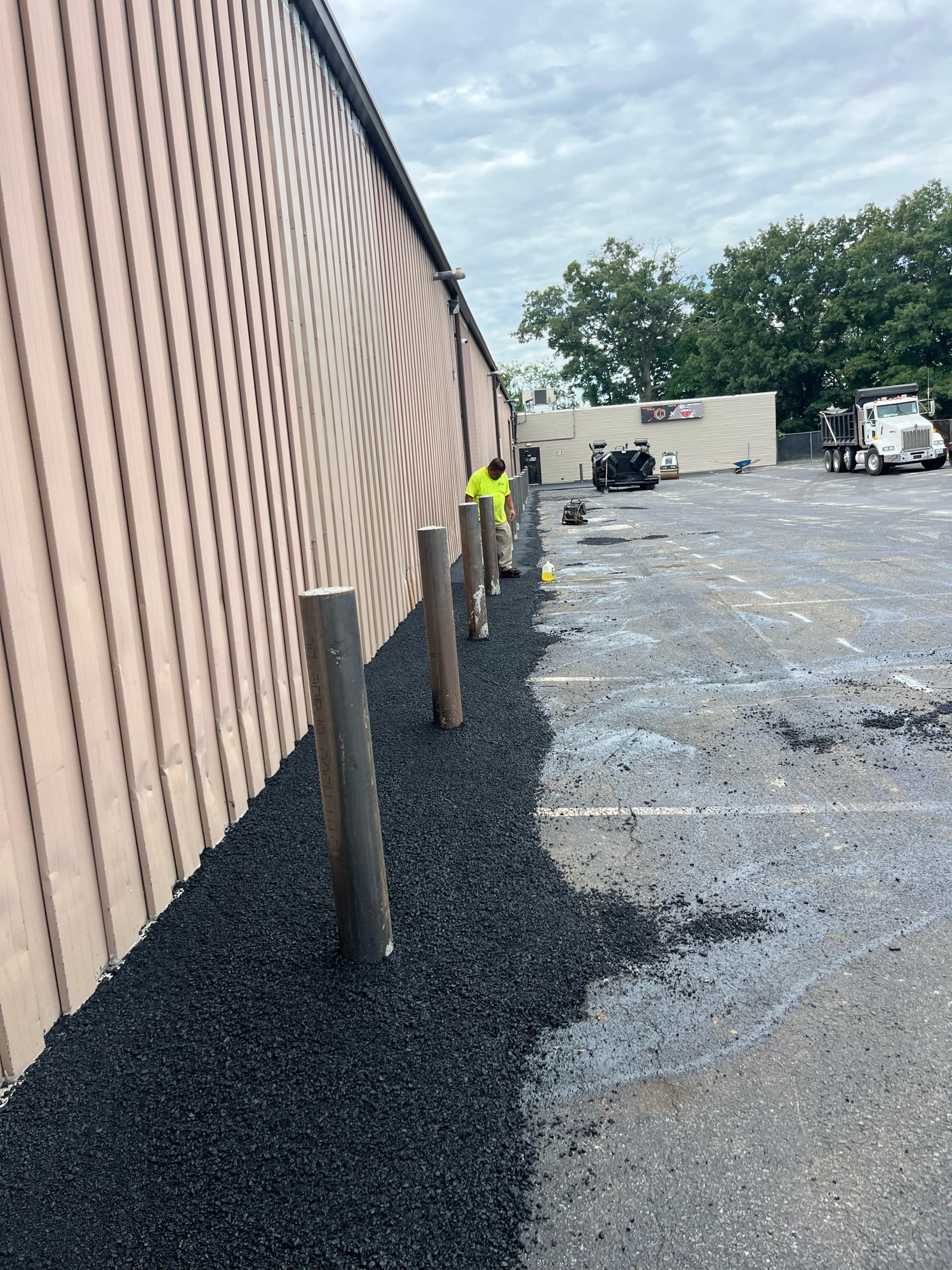
Our nine-person paving crew handled placement day. The finished parking lot also received 27 new six-inch steel bollards, concrete-filled and PVC sleeved, plus 28 new precast car stops installed on rebar pins.
Details at the Edges Counted Too
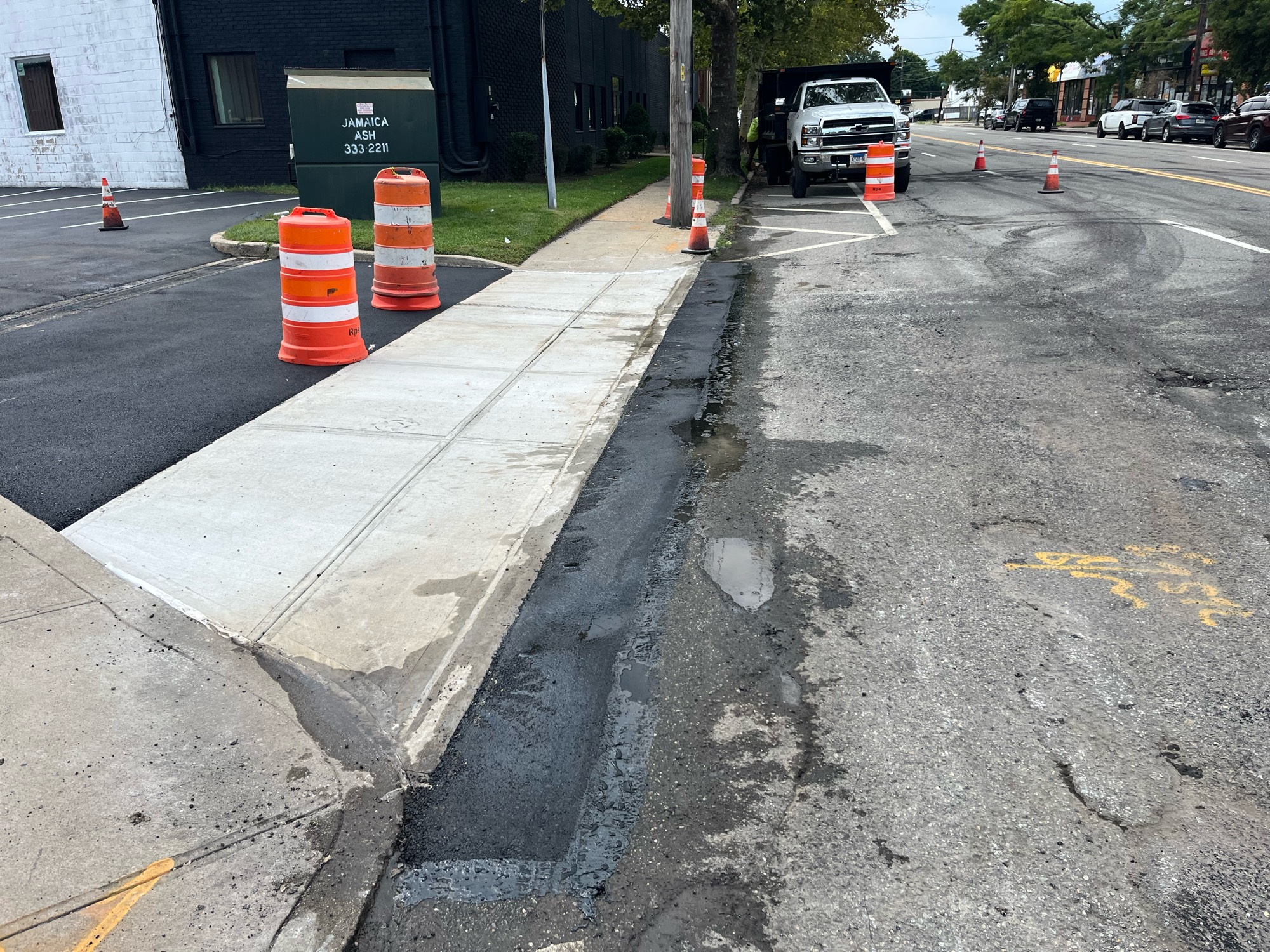
The work extended beyond the main asphalt field. Royal Pavement Solutions removed and replaced a 182-square-foot concrete apron using six inches of 4,000 PSI concrete reinforced with wire mesh.
At the pavement transitions, milling created smoother tie-ins where the new asphalt met existing surfaces. The project also included Nassau County DPW permitting and an 811 public utility mark-out before the work.
Taken together, the crack sealing, asphalt resurfacing, concrete replacement, drainage adjustments, bollards, car stops, and striping formed one coordinated parking lot project. The visible finish was only the final layer of that work.
If you are planning commercial asphalt paving in North Merrick, NY, contact us to review the existing pavement and build a scope that addresses what needs to happen before the new asphalt goes down.